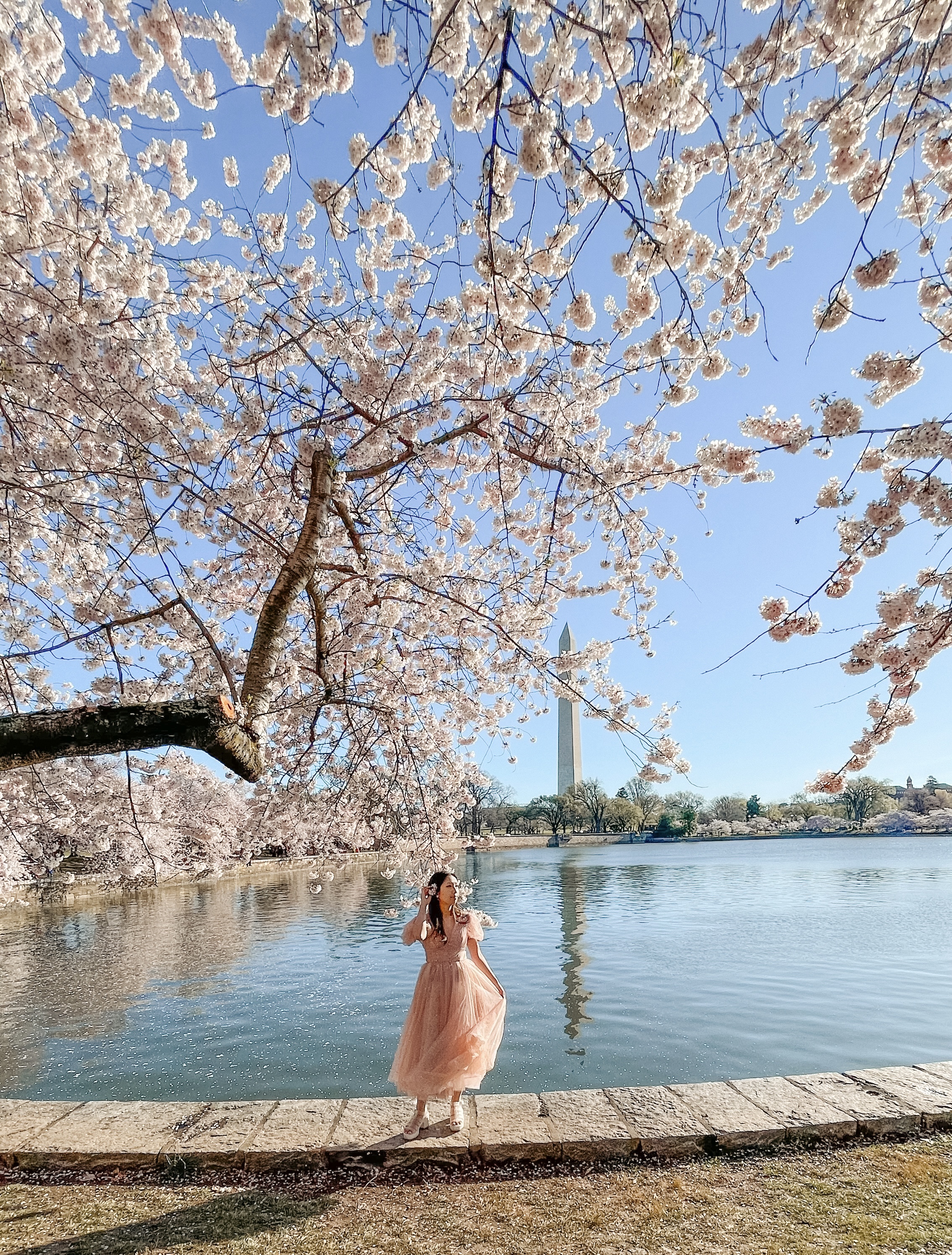
If you follow me on social media, you will hear me say this a lot, but cherry blossoms (aka sakura) are my favorite flower! And I will always be chasing these beautiful flowers when they start to bloom.
Take it from a former local having lived in Washington, D.C. for a couple of years and then continuing to revisit the DMV region to experience peak cherry blossom season, I would self-proclaim to be an expert in these flowers and D.C. So, let me take you to my old home and share cherry blossom season with you!
Table of Contents:
- 2026 D.C. peak bloom estimates
- What does “peak bloom” mean and why is it important?
- Where are the best places to see cherry blossoms in D.C.?
- Where should I stay in D.C.?
- How do I navigate to the cherry blossoms?
- Other details
- Enjoy D.C.’s cherry blossom season
2026 D.C. peak bloom estimates
The National Park Service (NPS), the official reporter, has predicted that D.C.’s peak bloom will occur between March 29 – April 1.
The Washington Post Capital Weather Gang (WP) has also made a prediction, stating it will be April 3 – 7.
NBC’s Storm Team 4 predicts the peak bloom date will be March 30 – April 5, 2026.
What does “peak bloom” mean and why is it important?
You will hear myself and others say to plan your visit to Washington, D.C. during peak bloom dates if possible. You may also see multiple sources share their predictions for 2026 peak bloom dates, but those dates may not be the same. What does all of this mean, why is it inconsistent, and why should it matter to you?
Definition
When it comes to cherry blossom flowers, “peak bloom” means that roughly 70% of the sakura trees in the area have open or blooming flowers.
Now you may ask, why is it reported at 70% and not 100%? Like us, cherry blossom trees all grow and bloom at different rates. In D.C., there is an “indicator tree” that always blooms earlier than the rest; and there also trees that typically bloom later. Hence, not all of the trees will be in full bloom at the same time, so you will want to aim for that sweet spot.
Why is peak bloom date important?
Timing your visit during peak bloom will allow you to experience the season during its optimal period: when most of the trees are in full bloom at the same time.
Cherry blossom flowers also wilt very quickly. Normally, these flowers will remain open for roughly one week. Yes, just one week. They may remain in bloom for longer, only if the weather is agreeable (e.g. moderate, sunny, etc.), or shorter if the weather is disagreeable (e.g. extreme, high winds, etc.). This means you have a small window of opportunity to enjoy viewing the sakura at their finest: roughly a few days before peak bloom hits until roughly a week after peak bloom has passed. It’s actually for this reason that the Japanese people love cherry blossoms so much because sakura represent the nature of life: how fleeting yet beautiful it is.
Hence, this is why planning your trip to D.C. to be as close to the peak bloom date as possible can be so important. If you arrive too early or too late, you might just miss sakura season and barely see any flowers.
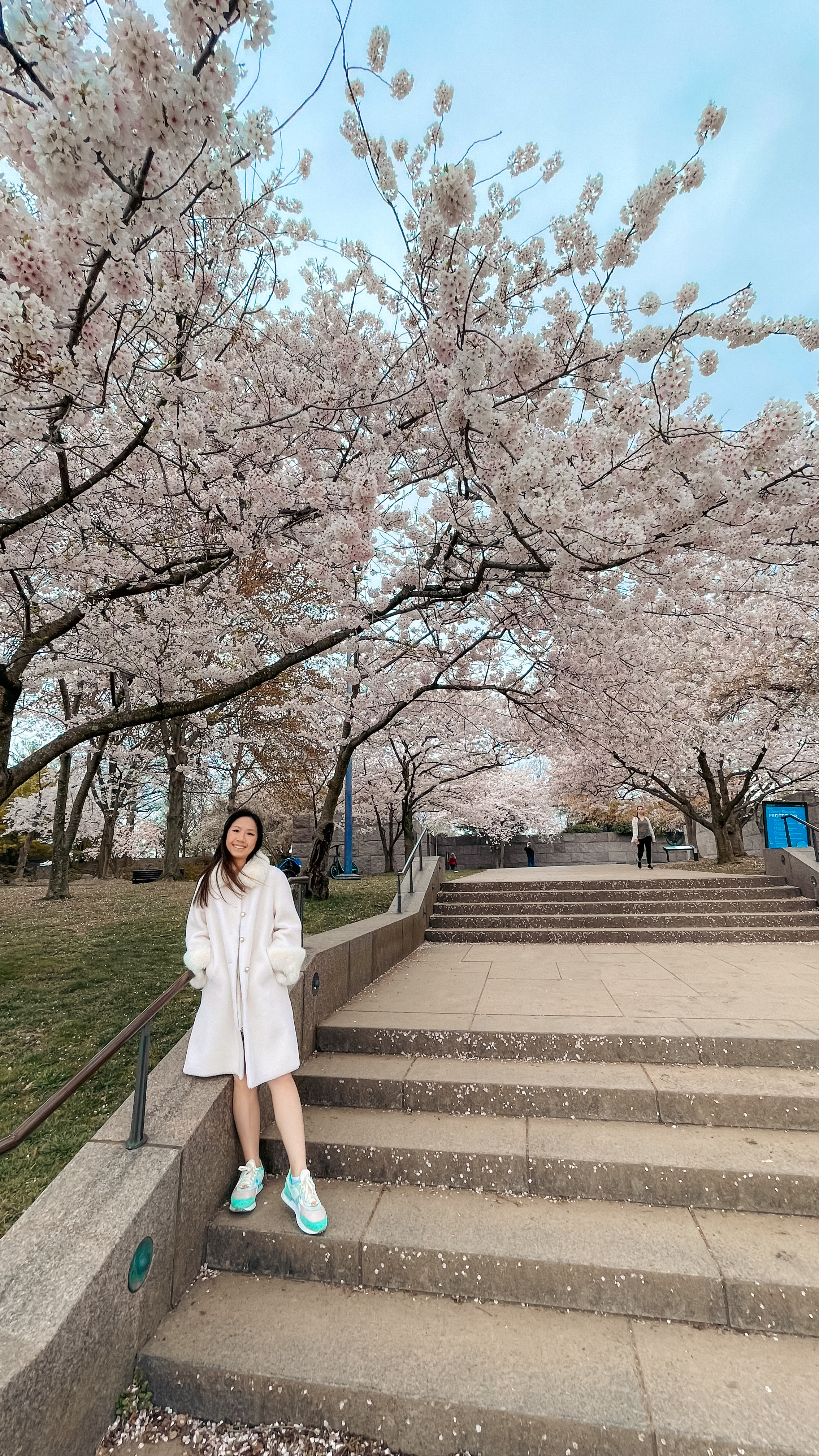
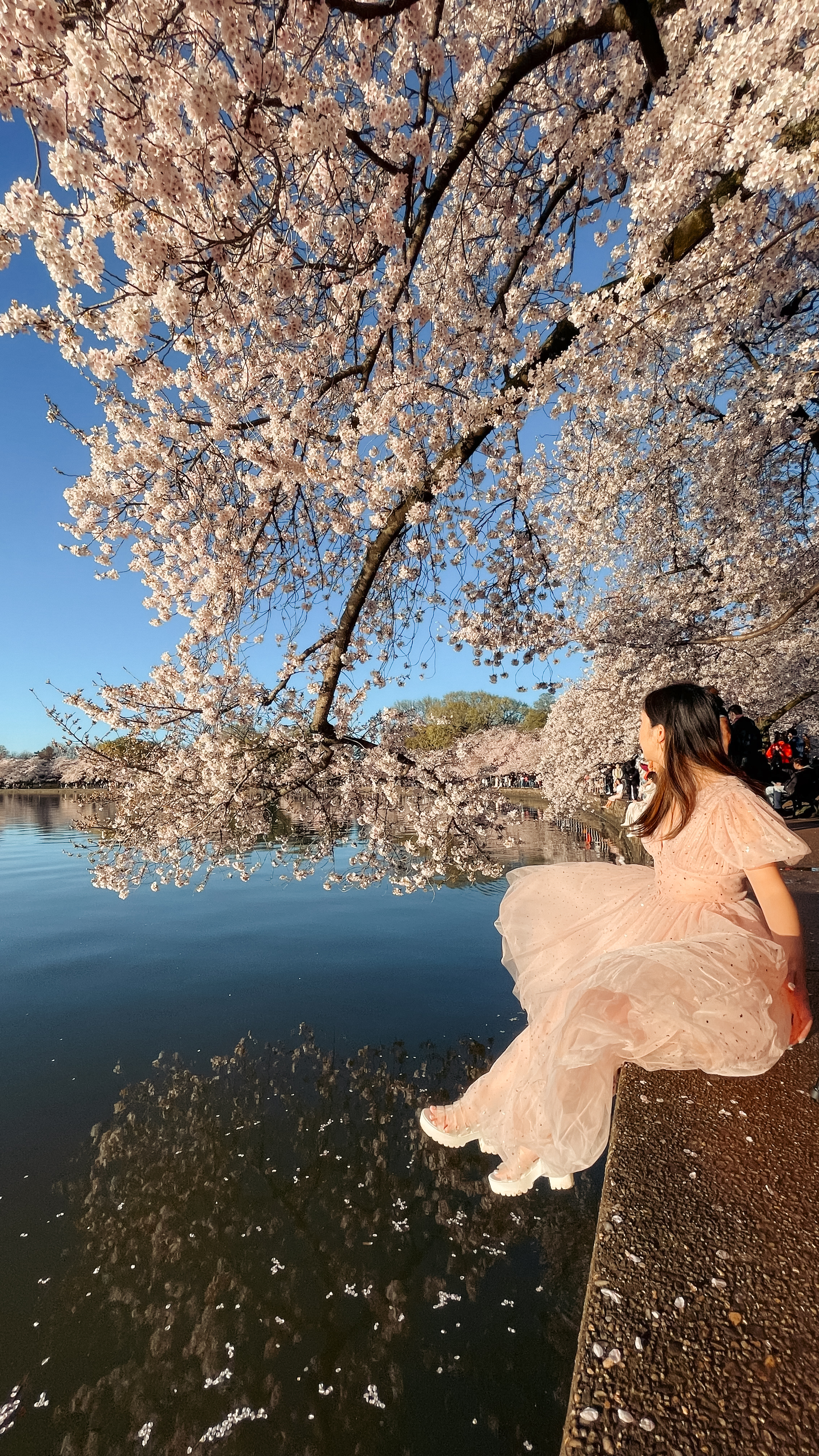
If you want to see videos of the sakura during peak bloom, you can watch them on my Instagram here.
Given the 2026 estimates, when should I visit?
Now that we have the official 2026 estimates, I would highly suggest to center your trip around the March 30 – April 5, 2026 timeframe. You’re usually better off arriving towards the middle or end of the estimated range because the trees can appear bare if you’re early (the flowers have yet to bloom). However, if you arrive slightly after peak bloom, it may just be less vibrant or full, instead of bare.
Why is the exact peak bloom date uncertain? Do you think it will change?
Predicting the future is hard, what can I say! Cherry blossoms, and any type of flower, are greatly impacted by the weather, so we are at Mother Nature’s mercy. The current estimates would suggest we aim for March 30 – April 5, 2026, but if unusual weather hits the D.C. area, then this date can change.
For example, if you monitor the weather and see that an unexpected cold front or a severe storm will come to D.C. in late March, then this means the temperature is not ideal for blooming and can delay the cherry blossoms from reaching peak bloom. Conversely, if an unexpected warm front comes through, then the flowers will enjoy the warmth and bloom earlier than anticipated. If the weather remains fairly stable and consistent, then we will most likely retain the current estimate.
If you live in the DMV region or somewhere on the East Coast, it may be easier for you to remain flexible in your planning and change your trip dates depending on the weather. However, if you do not live close by, you may not have this luxury. In that case, I recommend sticking to the current estimates and hoping for good weather!
And if you’re reading this now, I also highly suggest you begin to book your flights and accommodations for your D.C. trip if you have not already. This is a very popular time for both locals and tourists to visit, so accommodations (also restaurant, activity, etc. reservations) will book quickly. If you had already made bookings but want to change your timeframe to sync with peak bloom, then I highly encourage you to do so if possible.
Vania, what if I already planned my trip and I won’t be coming on time?
Not all hope is lost! I know people (myself included) have had concerns about what to expect if you don’t arrive during peak bloom. What if you come too early or too late? In all honesty, the peak bloom date is important, but it also may not have a great significance or impact on you personally. Let me explain.
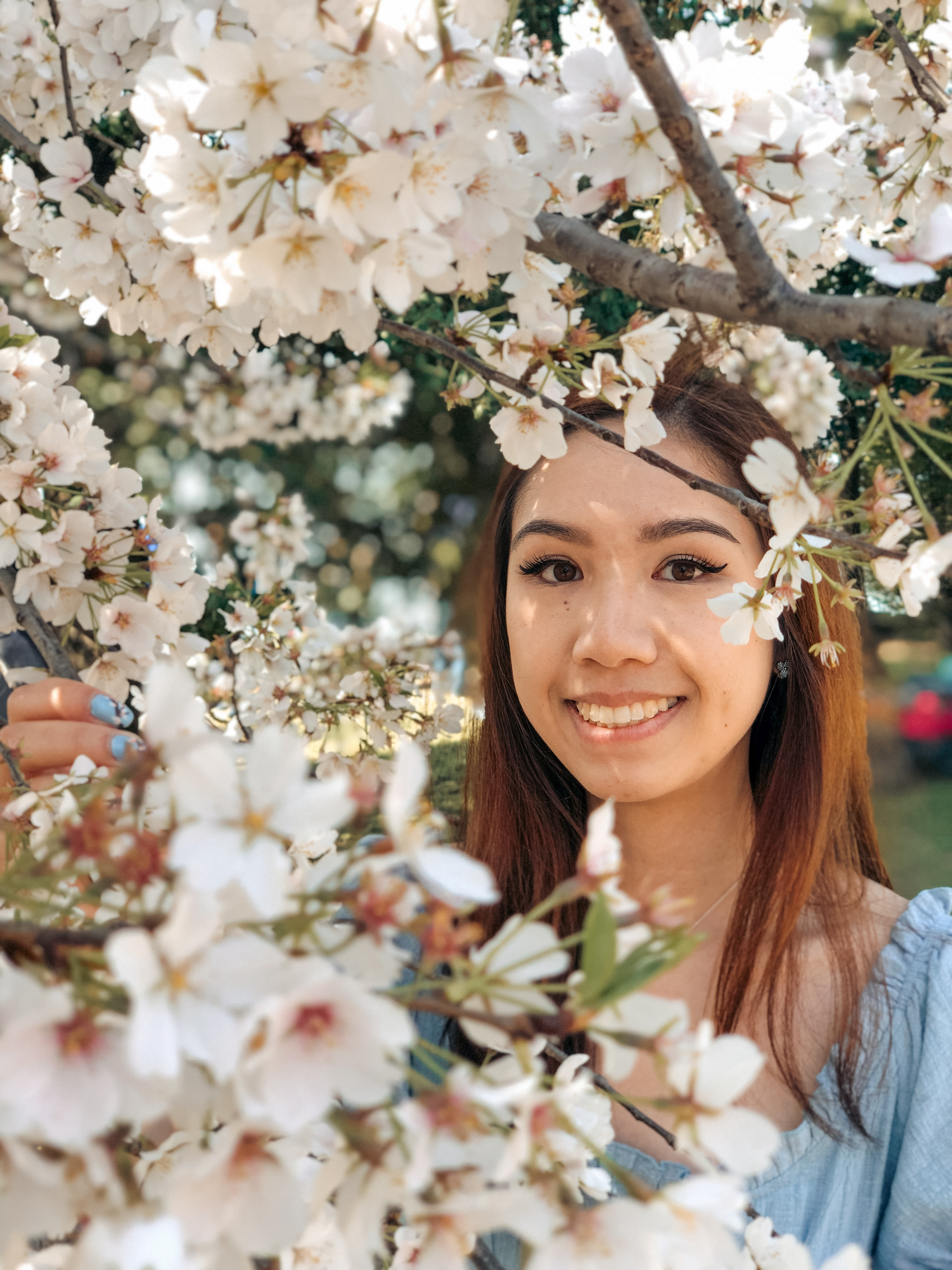
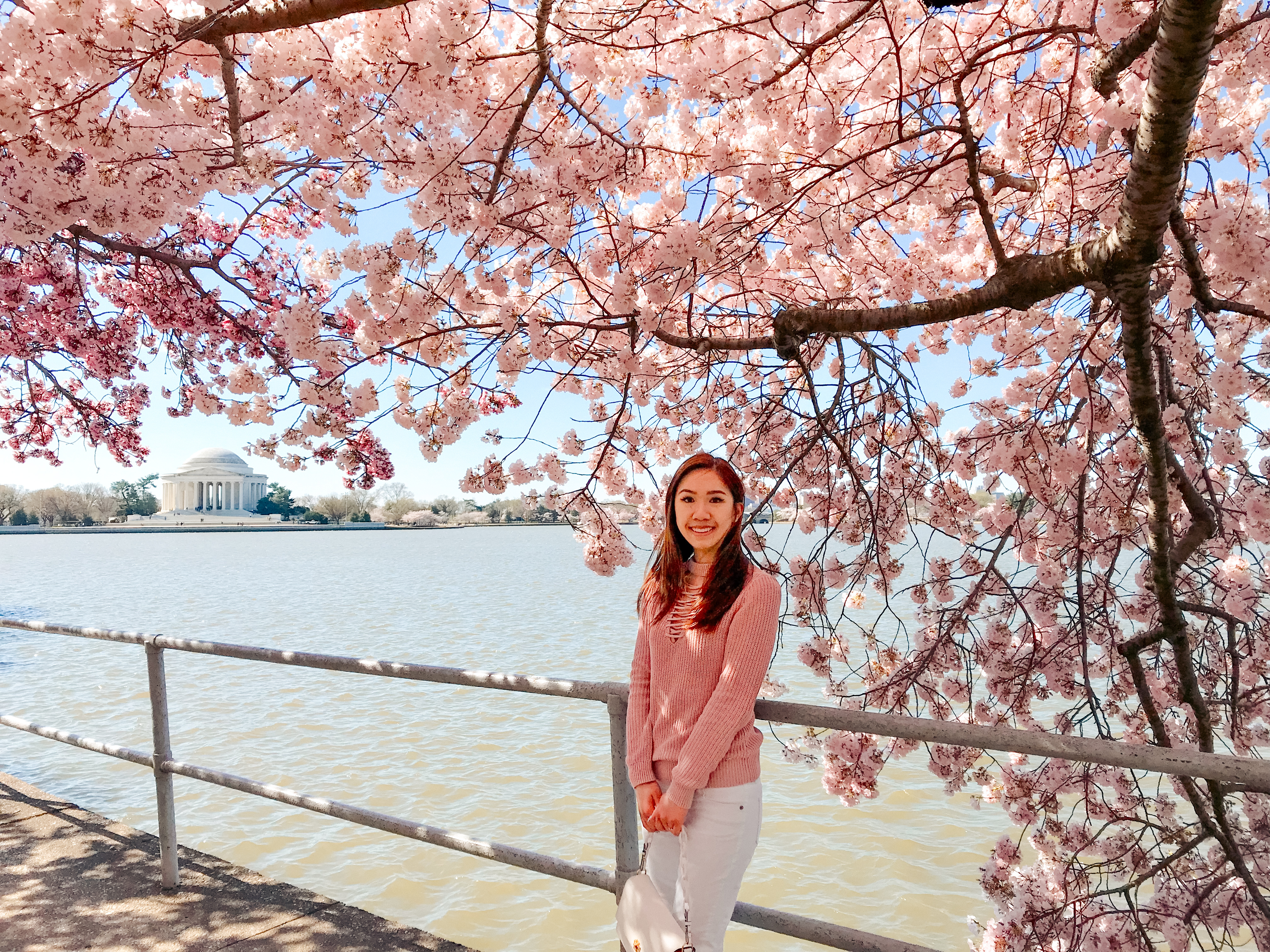
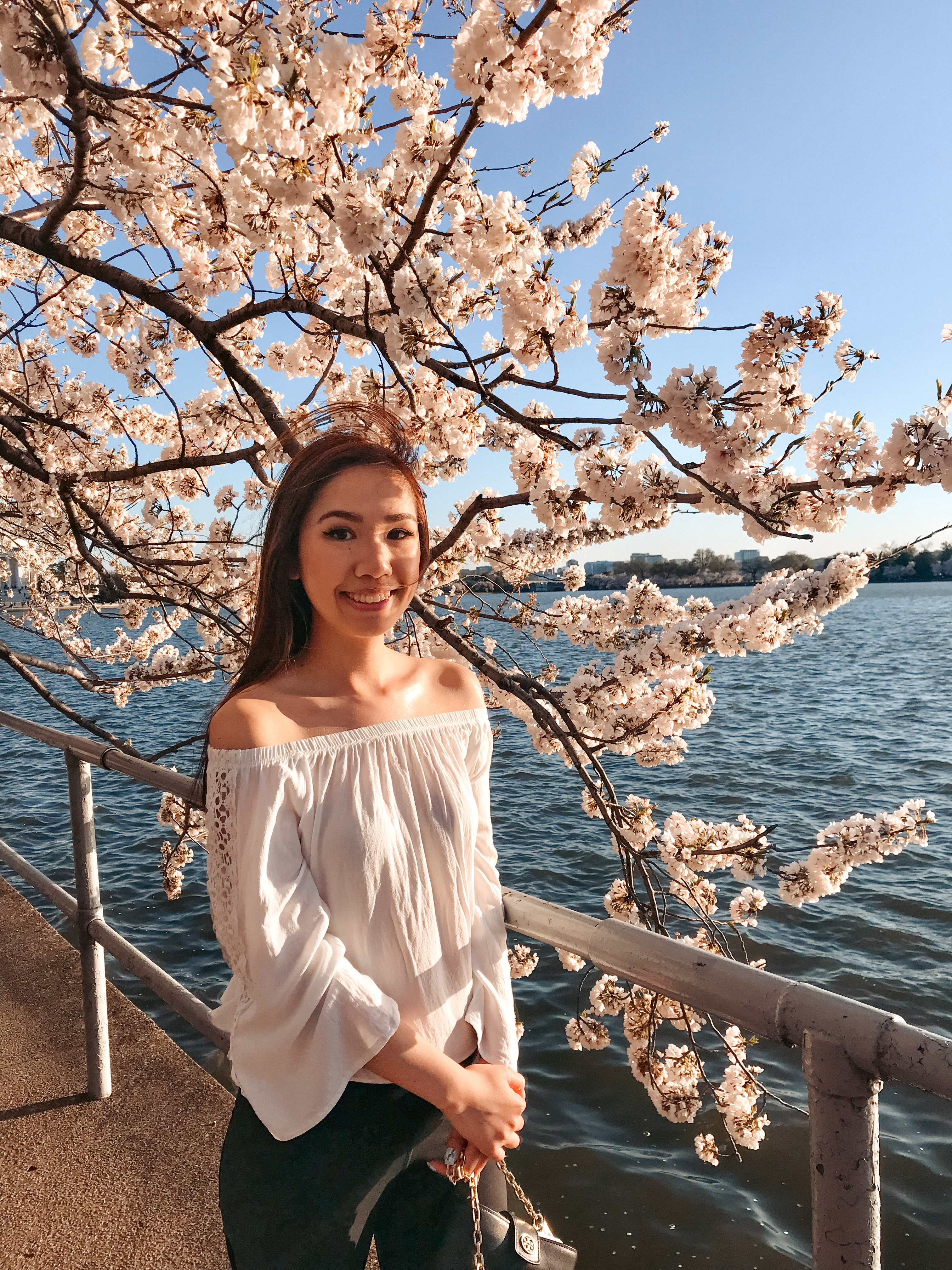
Peak bloom does not necessarily mean peak beauty! If you come to D.C. during the general timeframe around peak bloom, it may not matter to you to visit exactly on the peak bloom date. Let’s play a quick comparison game first. I’ll show you three images below. Take a look and try to spot the overall differences in the flowers. Can you guess which photo was taken before, during, or after peak bloom date?
These are three photos that I have taken of the D.C. cherry blossoms, not shown in chronological order.
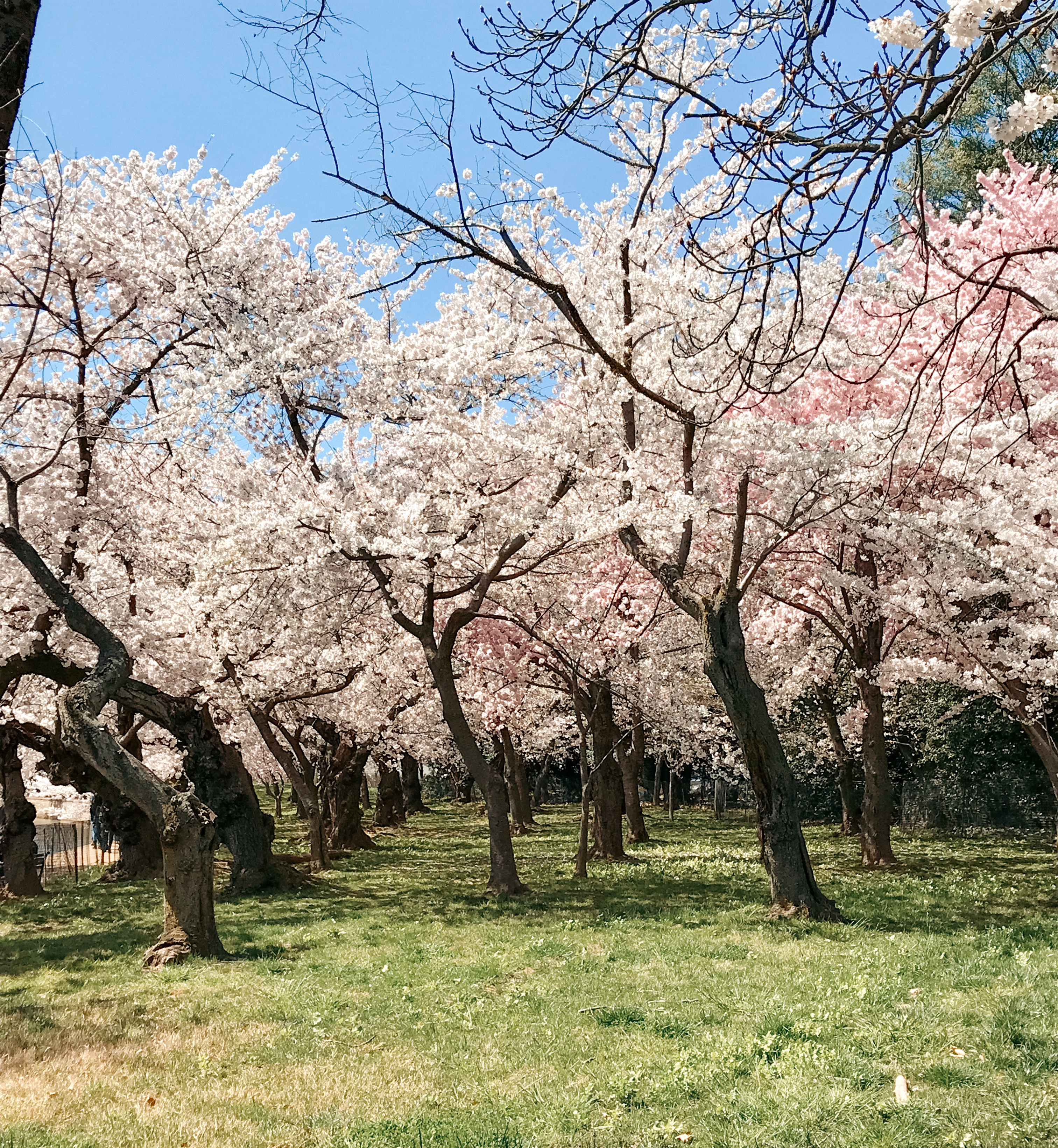
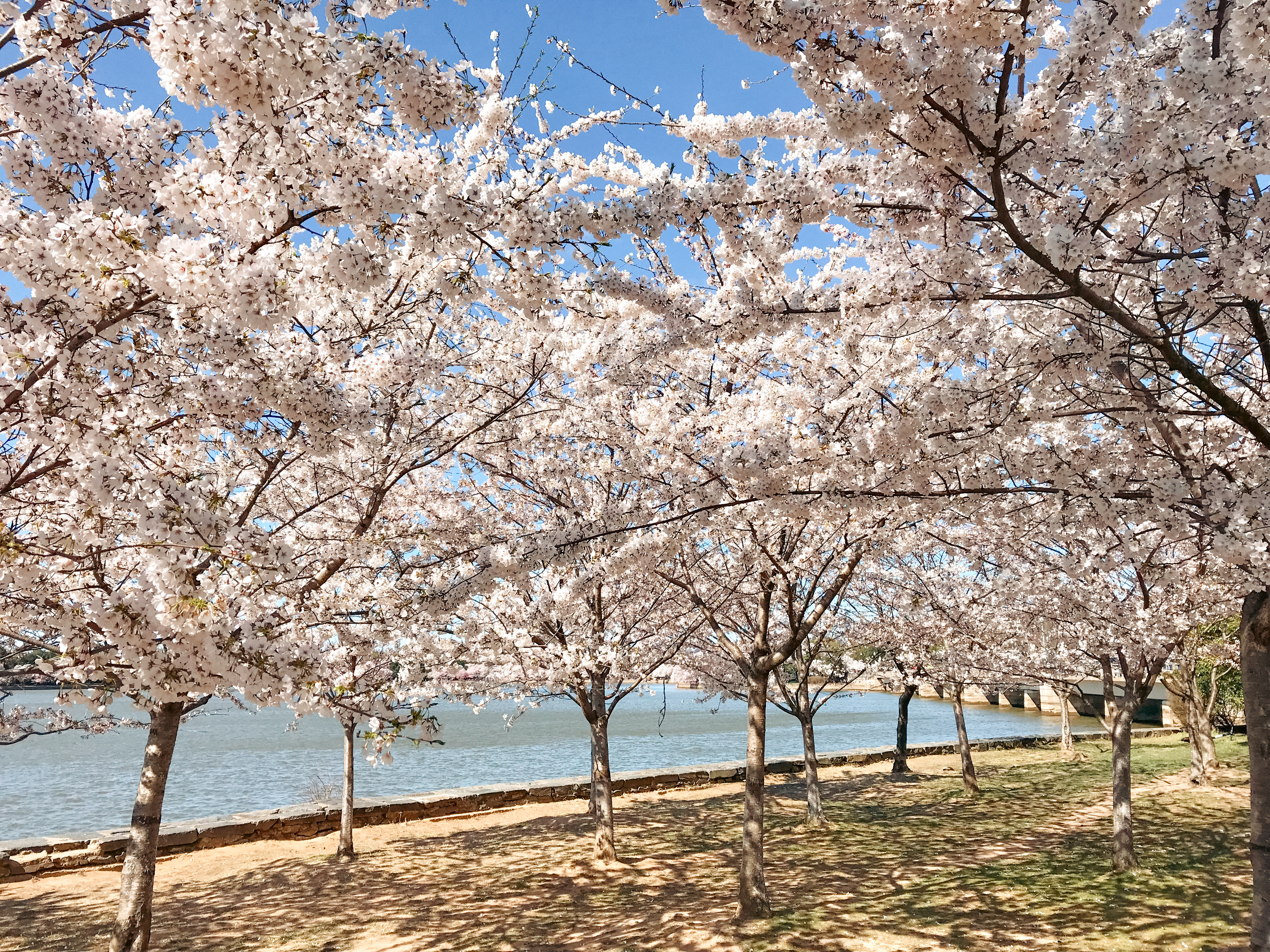
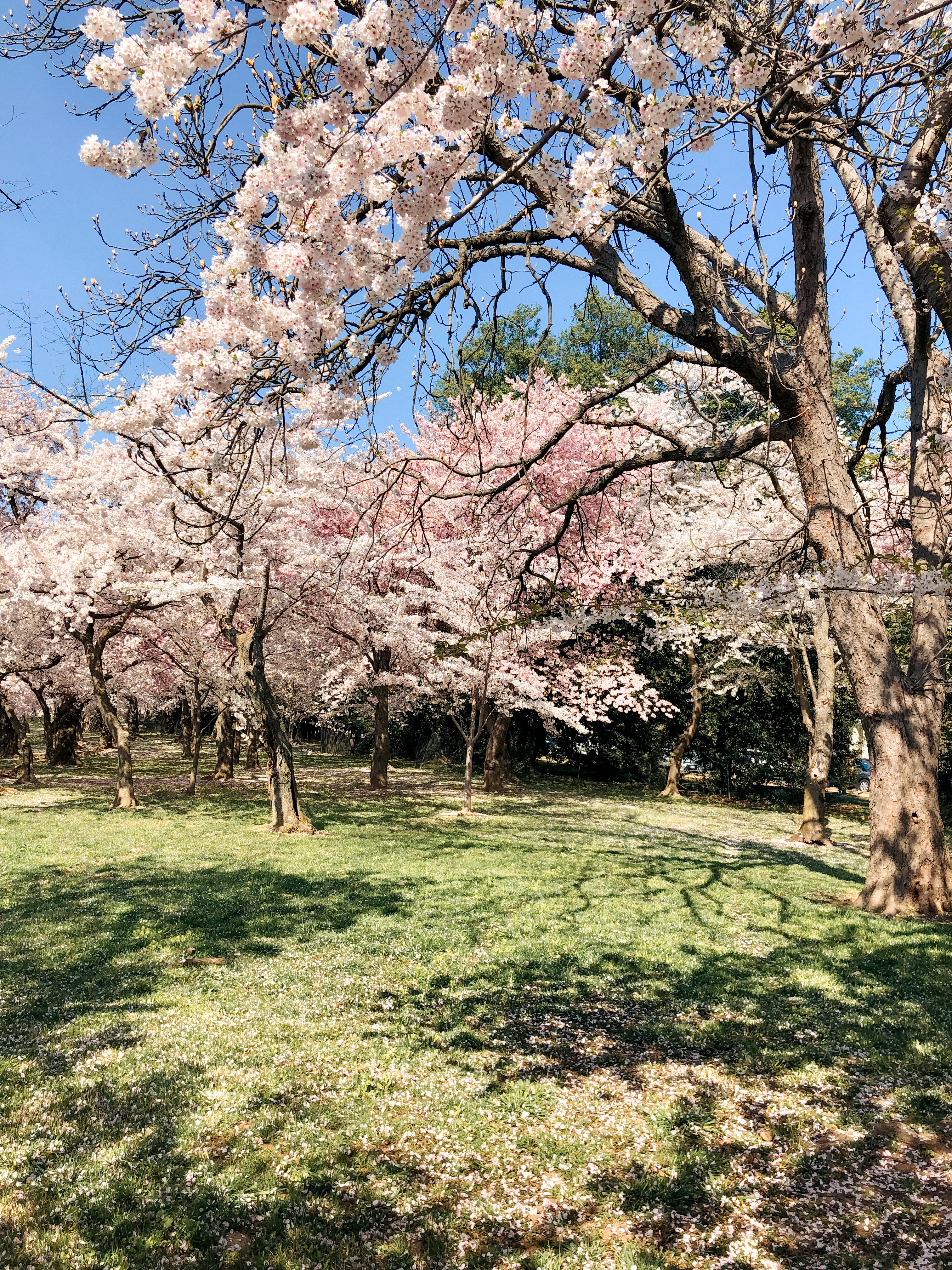
If you cannot see a difference or if you find them insignificant, then I promise you that you will enjoy the sakura regardless of whether you come a little early or a little late (as long as you remain within that optimal window: a few days before peak bloom and a week after)! After all, “peak bloom” is just a term. Can we really see the difference between 50% versus 70% of trees in an area being in full bloom? This is why I say that peak bloom does not mean peak beauty. If you don’t notice or care about the differences, then you will still find it to be beautiful when you visit!
However if you do see and also care about the differences between my photos, then you may want to reevaluate when you come to D.C. for the cherry blossoms. I would advise to come a little after peak bloom date, if you cannot come near the exact date. Once the flowers have wilted and fallen from the trees, they blanket the ground in a sea of white and soft pink. It is so stunning to see! I would much prefer seeing slightly bare trees but the ground covered in petals after peak bloom versus arriving early and seeing both bare trees and bare ground (which is what you’d see if you’re more than a week early).
Note: The three pictures I shared above are actually in chronological order: before, during, and after peak bloom, from left to right respectively. The “before” photo (left) was taken a few days before official peak bloom date in 2017. The “after” photo (right) was taken roughly ten days after official peak bloom date (although that year 2019, the cherry blossoms did thrive for longer than usual).
Ok, what if I completely miss the cherry blossoms altogether?
There is hope, my friends! Although you might not see any sakura, the great thing about spring is there are so many other flowers to see!
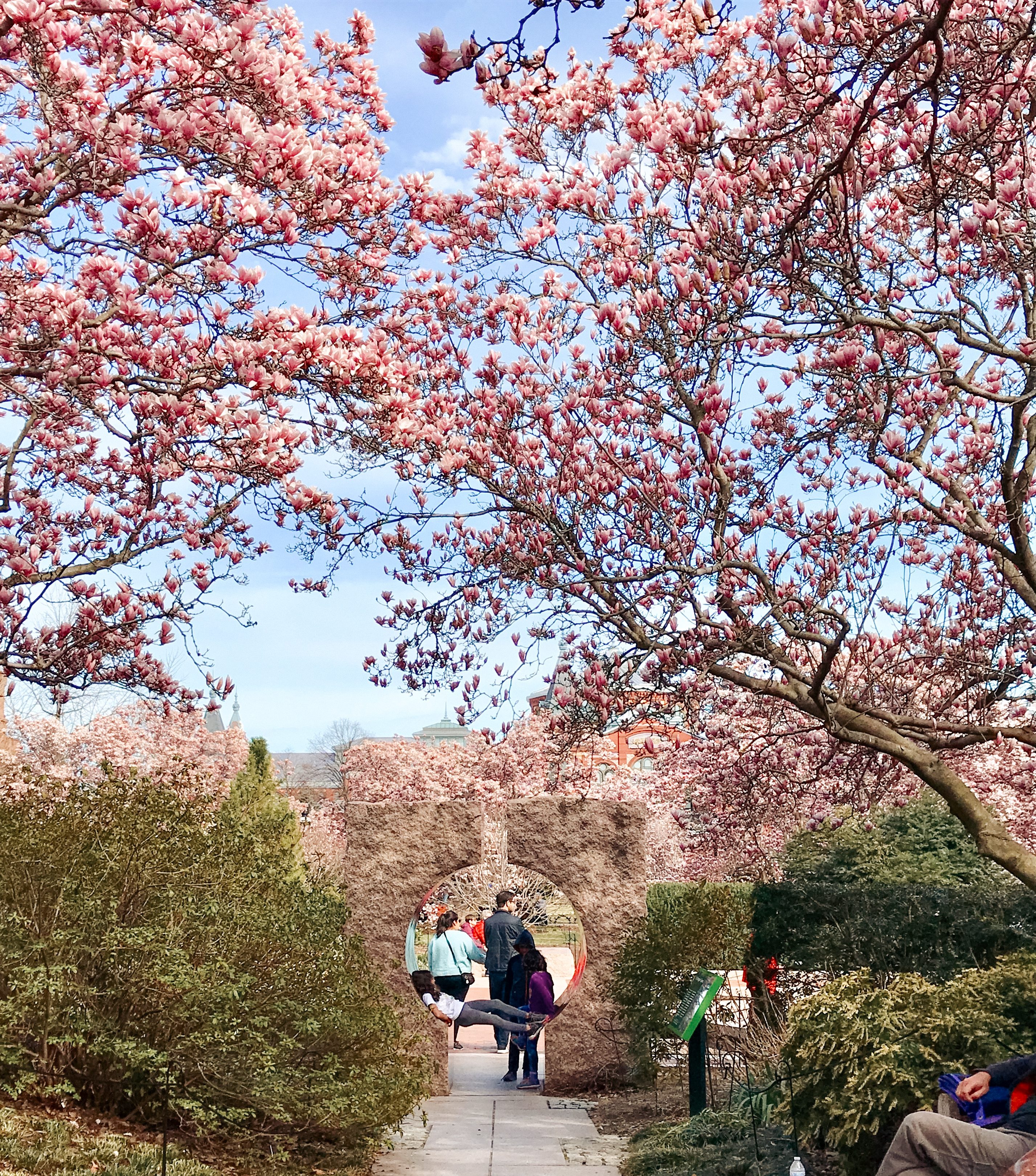
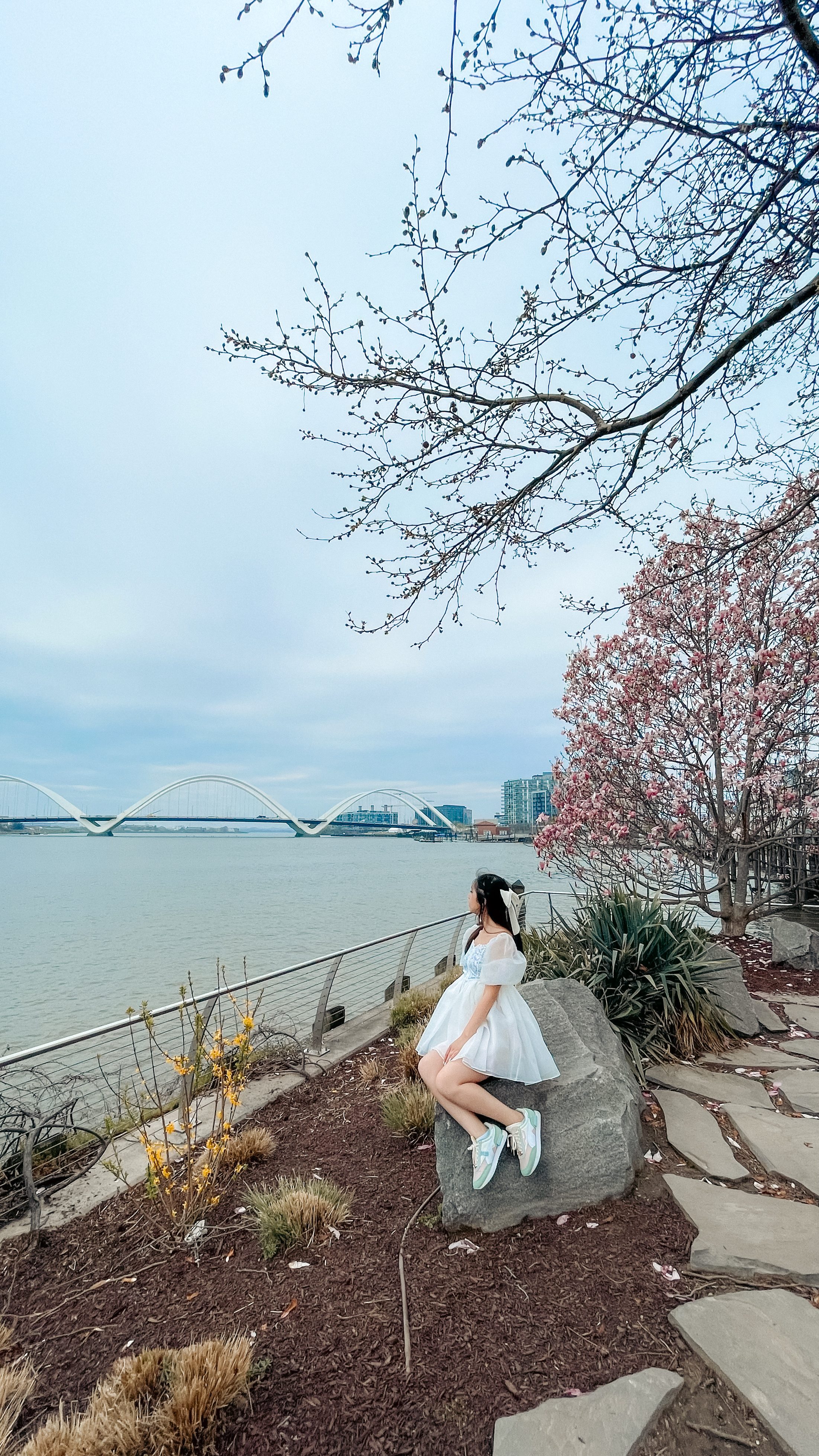
If you arrive early, you may catch the magnolia blossoms during or after their peak bloom date! The magnolia blossoms will be easiest to find at Smithsonian Castle, a free museum in D.C. that you can visit on the National Mall. (The castle itself is currently under renovation as of March 2024, but the garden remains open.) The trees will be all throughout the courtyard and garden, you can’t miss them, and they bloom earlier than cherry blossoms! Another great location for magnolia blossoms is in Navy Yard, a bustling area along the waterfront. In 2023, I found some gorgeous magnolias around The Yards Park and other small areas around the National Mall.
If you arrive late to the cherry blossoms, you may see the tulips and Kwanzan (instead of Yoshino) cherry blossoms! For tulips, you can also find them at Smithsonian Castle and other areas throughout the city like in front of The Capitol Building and at Lafayette Square. For Kwanzan cherry blossoms, the best place to enjoy them is East Potomac Park!
Where are the best places to see cherry blossoms in D.C.?
Your best option will be to head over to the Tidal Basin, a man-made reservoir where you will find the most amount of cherry blossom trees in D.C. The trees surround the entire reservoir and also extend out to other parts of the National Mall Park, such as the Washington Monument. You can find other smaller, patches of sakura trees as you walk throughout D.C., such as the ones near the National Building Museum. You can watch my Instagram reel here to see the flowers at various locations.
The Tidal Basin is also quite large, with the loop trail being 2 miles long, so there is much to see and explore! You will be able to enjoy various views of both D.C. and the cherry blossoms as you walk around. There are many monuments here, like the Martin Luther King, Jr. Memorial, and other sights throughout the Tidal Basin that will make it worth your time to visit and linger, even if it is the most crowded location.
Where should I stay in D.C.?
Now that you’re beginning to plan your trip to Washington, D.C. for the blossoms, stay anywhere near a Metro station or public transportation if possible. The public transportation system here is expansive, affordable, and fairly consistent at being on-time.
Other people might recommend certain hotels so you can be closer to the blossoms, but the truth is you will have to do some walking regardless, in order to reach the Tidal Basin. So, yes, you can save yourself some transportation time by choosing a hotel that’s as close to the Tidal Basin as possible. It will most likely be quite expensive, though. However, you will be fine choosing any hotel in the D.C. (or even Maryland or Virginia) area as long as you’re near public transportation.
How do I navigate to the cherry blossoms?
The two closest Metro stations to the Tidal Basin are Smithsonian and L’Enfant Plaza. I highly recommend exiting at Smithsonian Station, since you will have a beautiful walk to the Tidal Basin along the National Mall park. It will take about 15 minutes to walk there, but the route is relatively flat and also easy to navigate (keep going west or follow the crowds). In contrast, the walk from L’Enfant Plaza to the Tidal Basin will require you to take the southern waterfront route, but that particular walk is not as scenic; this path is also narrower and involves a slight incline.
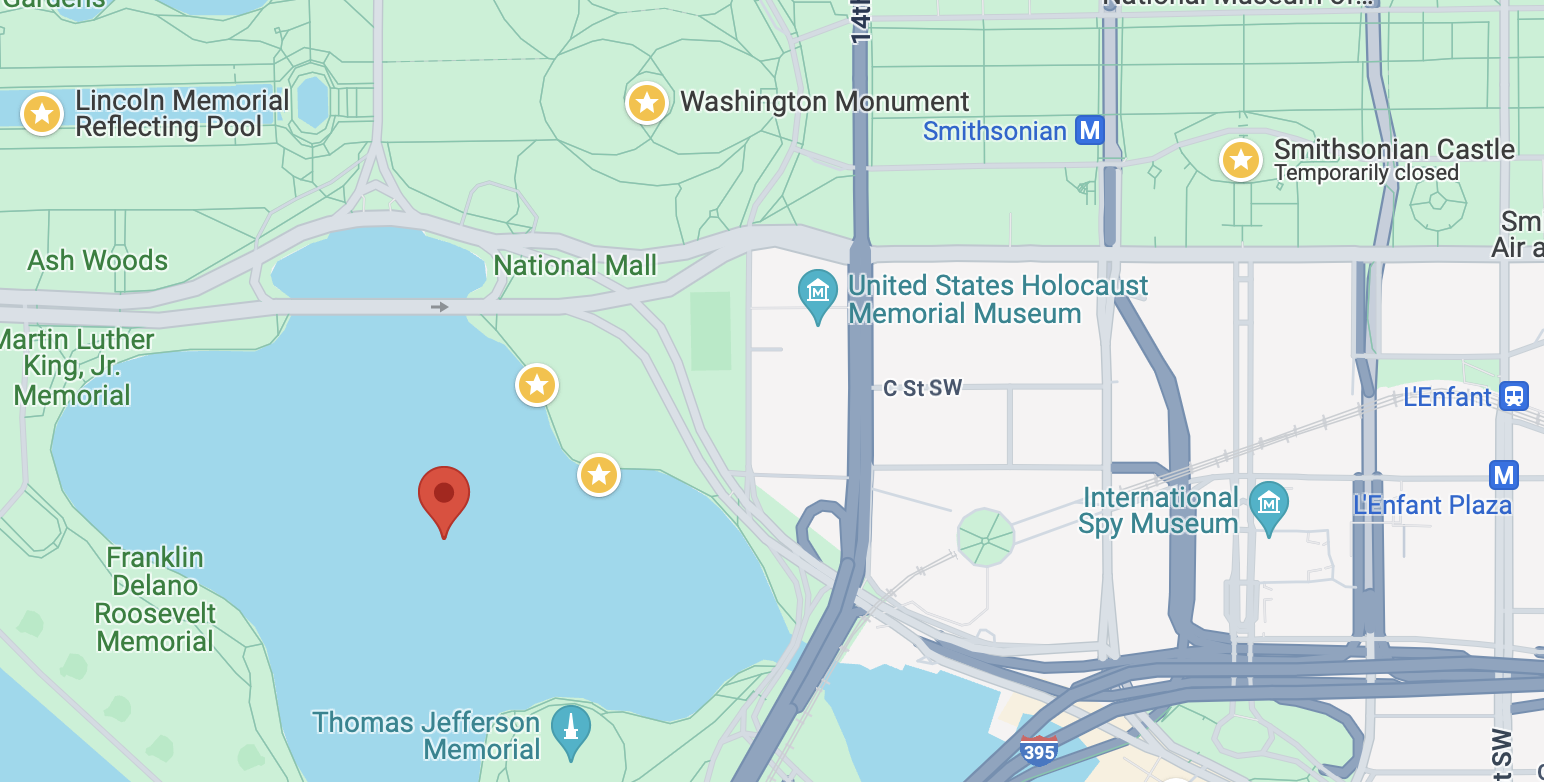
You can certainly choose to use a ride share service (Uber of Lyft) instead of public transportation! However, just be aware that you will run into a variety of potential issues. Cherry blossom season is a very popular time for both locals and tourists to visit D.C. Therefore, your ride shares will cost more than normal due to high demand. For example in 2023, I paid $32 USD before tip for a 15 minute ride out of the National Mall area in the evening (and I even walked far away from the crowds)… ouch! You will also face more traffic getting around the city in general. This is not only due to the high volume of people in the area but also because the roads around here are often blocked off for pedestrian traffic and cherry blossom festival events. With this in mind, I also highly discourage renting a car and driving yourself to the Tidal Basin; there is no nearby parking and options will be further limited due to road closures.
So if you want to use a ride share service, I highly recommend getting dropped off somewhere near the National Mall then walking the remainder of the way. If you want to leave the Tidal Basin, I highly recommend walking far away enough from the National Mall that you can call an Uber or Lyft and have them pick you up with ease.
Other details
Free to visit
Most attractions in D.C., including the Tidal Basin, are free to visit! Since the Tidal Basin is a portion of the National Mall park, it’s open to the public. If you want to visit certain other museums or attractions, you may want to reserve free tickets in advance since they may run out of availability.
Weather & attire
D.C. is generally quite cold in late March! You should expect highs in the 50s Fahrenheit and lows in the 30s. I may be wearing dresses in my photos, but I was freezing (and immediately put my jacket back on after those photos). Be prepared to be cold!
Enjoy D.C.’s cherry blossom season
I hope you enjoy your visit to Washington, D.C. and can see the cherry blossom flowers in their full glory. If you have any questions, don’t hesitate to comment below. I also have so much more advice and photo inspiration to share with you! Chat again soon!
 vaniabeann